
Understanding MVP Background Jobs
Ever wondered why your MVP seems to lag? The culprits might be those elusive background jobs. They’re the silent operators, managing tasks that don’t scream for immediate attention. Think sending emails or data processing. These jobs are like the unseen engine keeping your application humming along.
But, here’s where many folks trip up — even in 2026, I’ve seen founders making this mistake. They go overboard. Background jobs should be the backstage crew, not the lead actors. When tech thrives on speed and efficiency, getting these jobs right can mean the difference between a hit and a flop for your MVP.
[INLINE IMAGE: Diagram of MVP background job architecture]
What Efficient Task Queues Do Well
Now, let’s dive into task queues. Picture them as the taskmasters, ensuring those background jobs are handled smoothly and punctually. Efficient task queues are crucial — they keep everything ticking like clockwork. When your task queues are in top shape, they pave the way for your MVP to shine without glitches.
Here’s why this matters: speed and reliability are the twin pillars of your MVP’s success. Efficient queues are like a well-drilled team, handling thousands of tasks without a hiccup. Your app won’t crash just because a few background processes are hogging space.
From my experience across 45+ projects, I can tell you efficient task queues aren’t just nice-to-have—they’re essential. They help your MVP grow without the stress. Keep your MVP lean and competitive with these task queues as your allies.
[INLINE IMAGE: Bar-chart — Comparison of efficient vs inefficient task queue performance]
Where Background Job Setups Fail
Oh, the pitfalls of setting up background jobs—I’ve seen them firsthand at ZYOD and other startups. The number one blunder? Overengineering. Folks get tangled in complexity, addressing issues they don’t even face yet.
Startups and SMBs often hit this wall. With limited resources, nobody has time for unnecessary features. Outdated methods just add to the chaos, leaving you with a bulky system that’s a headache to manage.
If you’re nodding along, our Rescue service is here to streamline things. We cut through the clutter, zeroing in on what truly matters, and help you sidestep these pitfalls to keep your MVP rolling.
[INLINE IMAGE: Iceberg — Iceberg of hidden pitfalls in task queue setups]
Migration Checklist for Modern Task Queues
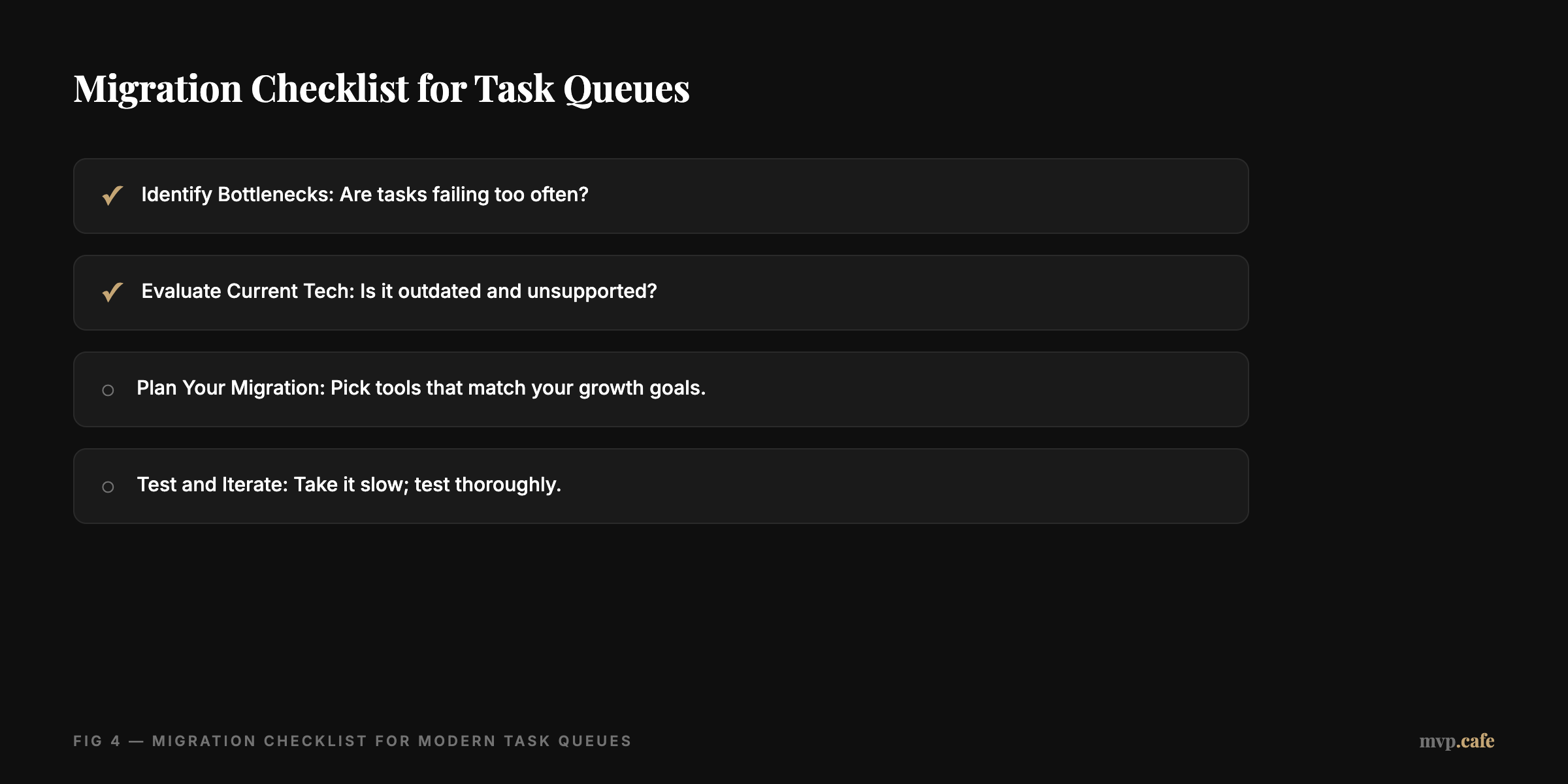
Thinking of moving to a modern task queue system? It’s a wise choice. But when’s the right time? Look for signs like bottlenecks or frequent crashes, or if you’re stuck with outdated tech.
Here’s a quick rundown:
- Identify Bottlenecks: Are tasks failing too often?
- Evaluate Current Tech: Is it outdated and unsupported?
- Plan Your Migration: Pick tools that match your growth goals.
- Test and Iterate: Take it slow; test thoroughly.
Consider tools like Redis or RabbitMQ. They’re solid and time-tested. Need guidance? Our quick consultation is just a click away.
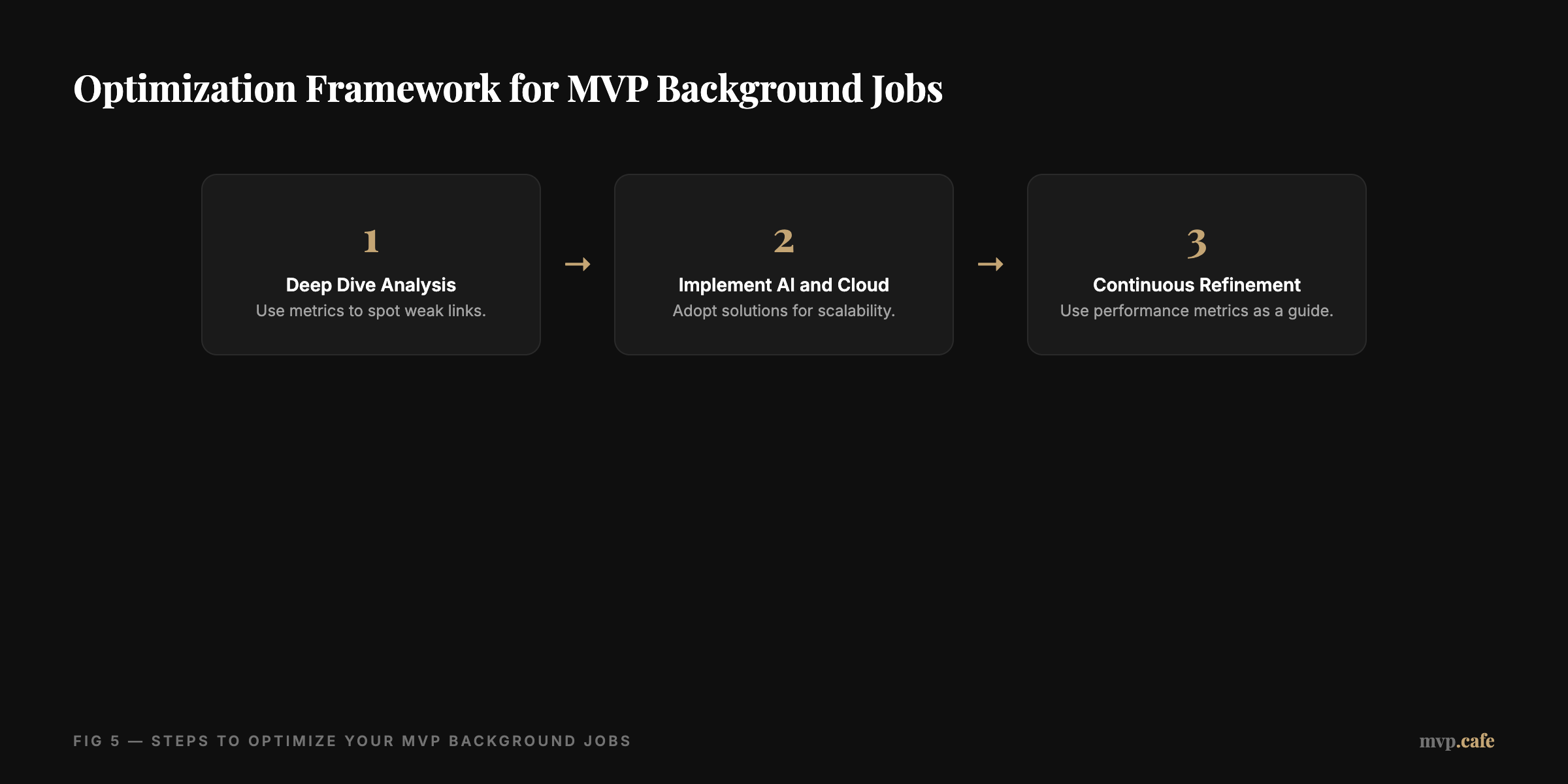
Steps to Optimize Your MVP Background Jobs
Optimization isn’t just jargon; it’s vital. Start with a deep dive into your setup. Use metrics to spot the weak links.
Then, bring in AI and cloud solutions. They’re not just trendy—they offer real benefits in scalability and efficiency. Companies can often improve processing times by adopting cloud solutions, which offer scalability and efficiency.
Lastly, keep refining. Optimization is a continuous journey. Performance metrics should be your compass. Keep adjusting until your background jobs are working at their best.
Pitfalls to Avoid in Task Management
Learn from those who’ve tripped up. At GoMechanic, we faced similar hurdles. Overengineering almost threw us off course until we streamlined our processes. The takeaway? Keep it simple.
My time at ZYOD highlighted the importance of lean task management. We cut our fabric cycle time by sticking to essentials rather than piling on features.
Don’t repeat these missteps. Focus on what matters and steer clear of flashy but unnecessary complexity. Check out how GoMechanic navigated these challenges to keep their MVP on track.
By following these strategies, you can dodge common pitfalls and keep your MVP running like a well-oiled machine.
By now, you should have a solid handle on MVP background jobs and the task queues keeping them in sync. If you’re feeling stuck or need professional insight, don’t hesitate to reach out for a Rescue. Let’s steer your MVP back on the right path.