
Understanding Email Integration for MVPs
Email integration isn’t just about sending messages—it’s your MVP’s direct line to users. When you’re rolling out a Minimum Viable Product, you can’t skip this step. It’s how you keep users engaged and in the loop.
Why is it so important? Emails are more than just updates. They keep users connected with your product, driving engagement and retention. Imagine launching your MVP and not being able to reach out directly to your users. That’s a big no-no. With email integration, you can send welcome emails, notifications, and even promotions to keep them hooked.
From my time with ZYOD, I’ve seen how a solid email system can cut churn and boost user satisfaction. It’s a tiny investment that can make a big difference. And here’s the kicker: non-tech founders, you don’t have to build it from scratch. Third-party services have got your back.
Why Use Third-Party Email Services?
Building an email system from scratch? That’s like trying to reinvent the wheel. It’s expensive and takes forever. Enter third-party email services. They take the complexity out of the equation, especially for those of us who aren’t tech wizards.
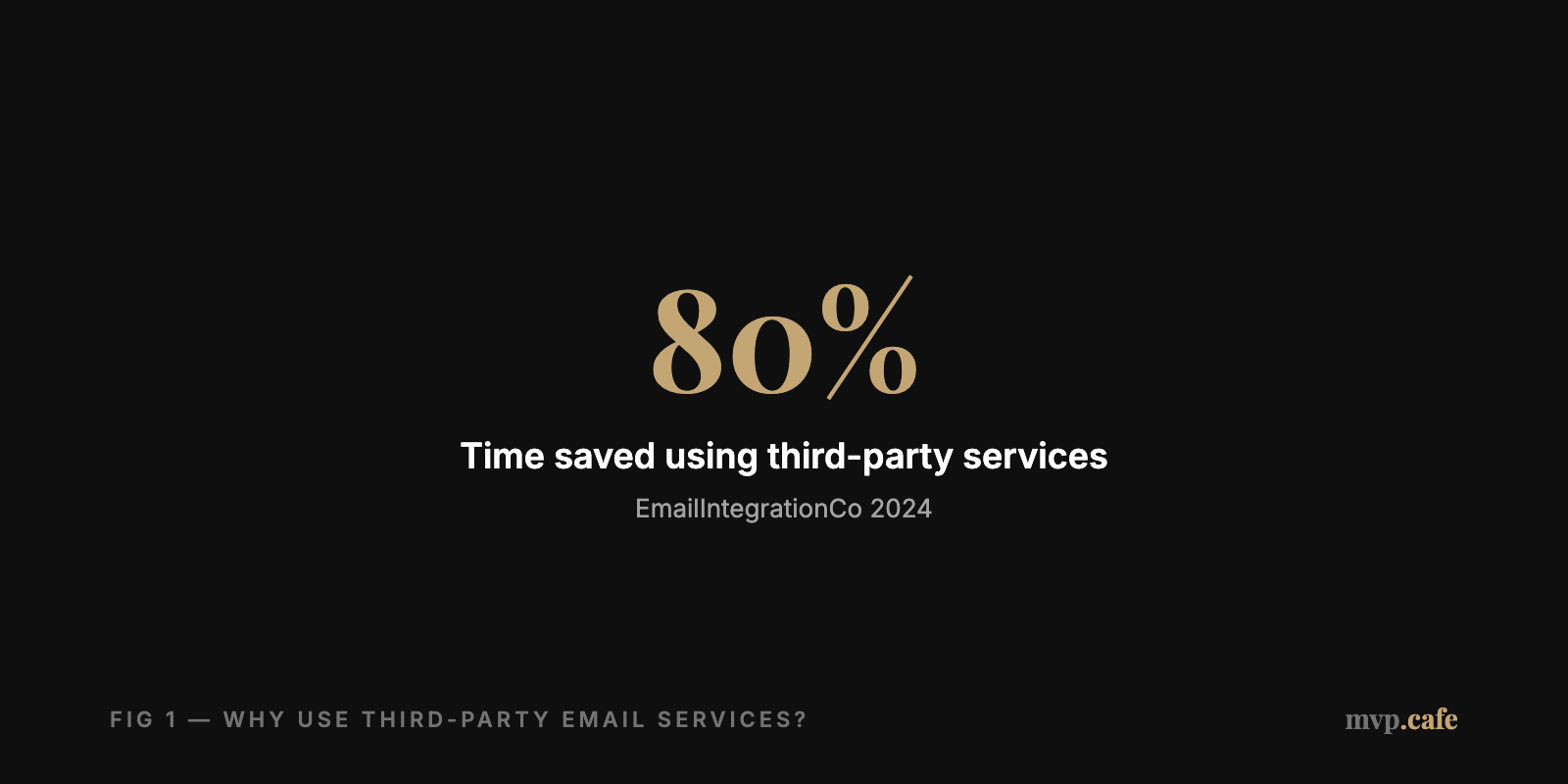
Let’s talk benefits. First, they save you time. Weeks of coding can turn into just a few hours. And the cost savings? Oh, yes. Companies like SendGrid or Mailgun offer plans that scale with you, so you avoid the massive costs of in-house development.
Then there’s reliability. These services manage billions of emails daily with the kind of infrastructure you’d want. And scalability? As your MVP grows, your email capabilities can expand too—without breaking a sweat.
For the full scoop on why third-party services are a game-changer, check out the benefits of using third-party email services.
Choosing the Right Email Service Provider
Picking an email service provider is like shopping for a car. You need reliability, features, and a price that won’t break the bank. Let’s break down some of your best bets.
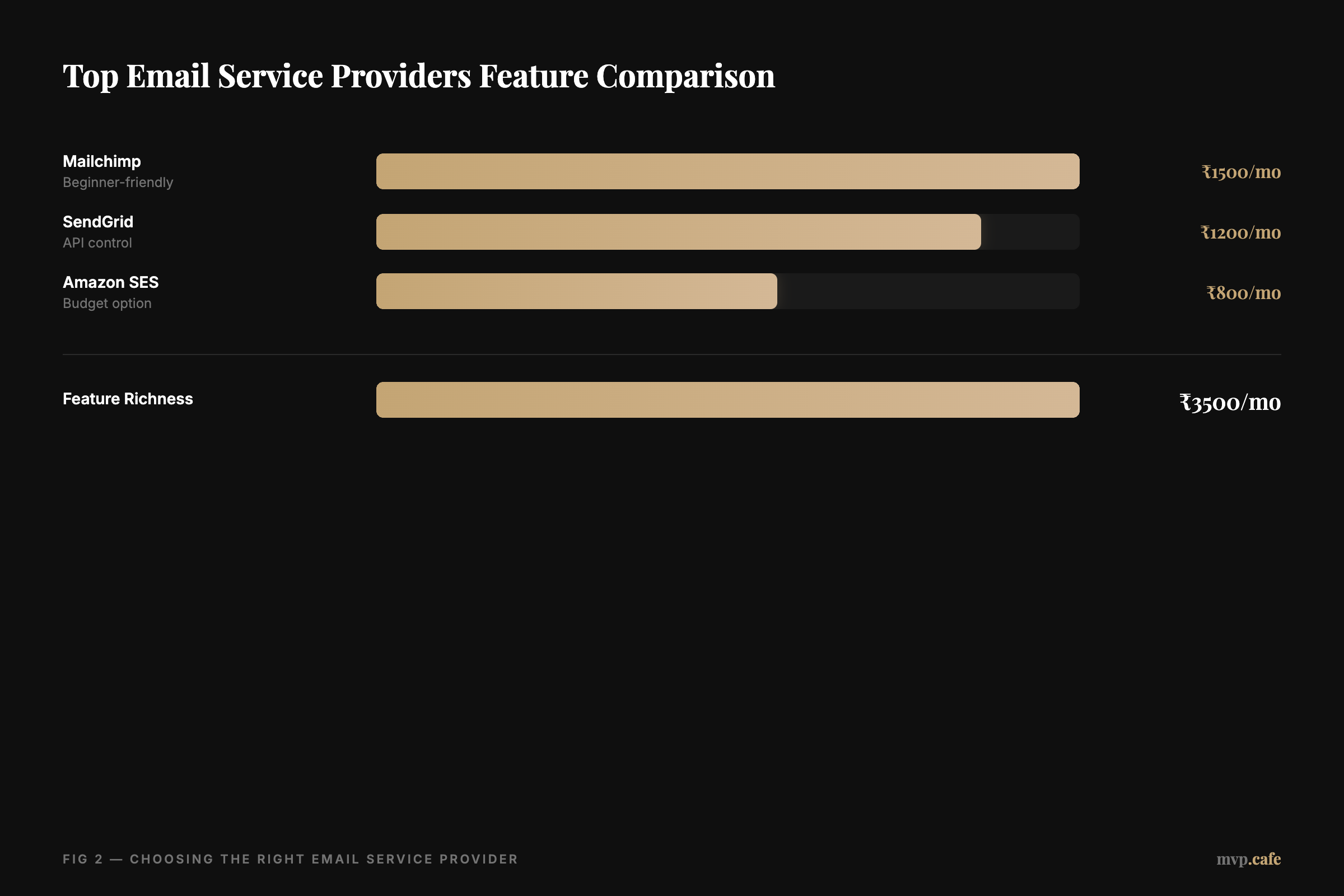
Mailchimp, SendGrid, and Amazon SES are top choices. Mailchimp is beginner-friendly and easy on the eyes. SendGrid offers powerful APIs if you need more control. Amazon SES? It’s the budget-friendly option, especially for high-volume needs.
What should you look for? First, features. Do you need advanced analytics or just basic email sending? Then, pricing. Mailchimp might be on the higher side but brings more to the table. And support matters. Especially if tech isn’t your thing. A provider with 24/7 support can be a lifesaver.
Here’s a quick comparison:
To find the best fit for your needs, compare the features and pricing of various email service providers. Consider aspects such as user-friendliness, scalability, and cost-effectiveness, along with the level of support offered, to make an informed decision.
Step-by-Step Guide to Integrate Email Sending
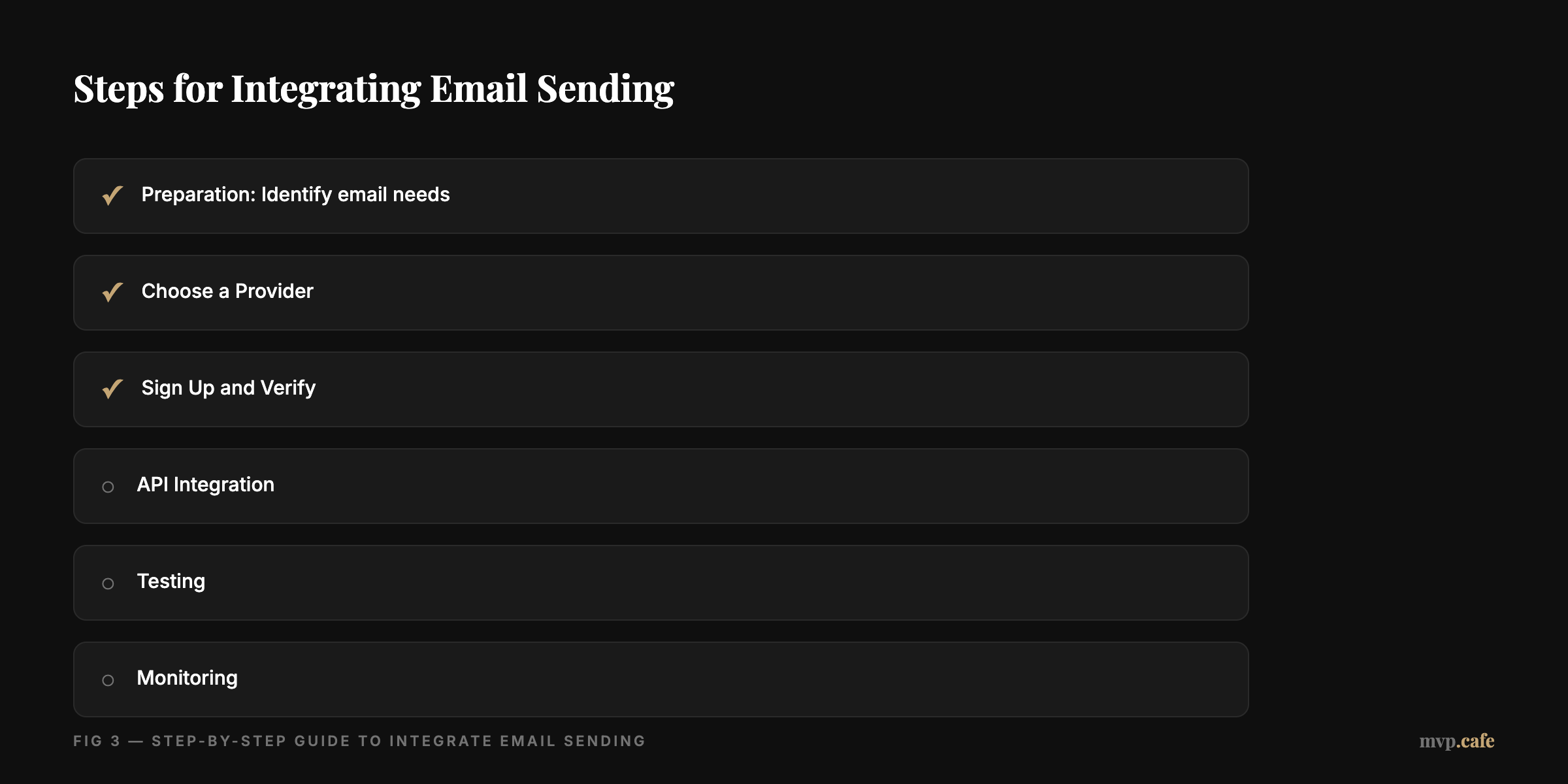
Ready to get started? Here’s a simple guide to integrate email sending into your MVP without breaking a sweat.
- Preparation: Know what you need. Is it transactional emails or newsletters?
- Choose a Provider: Pick your email service provider based on needs and budget.
- Sign Up and Verify: Register and get your domain verified with the provider.
- API Integration: Use the provider’s API to hook up with your MVP. Some basic coding might be needed.
- Testing: Fire off some test emails to make sure everything’s working.
- Monitoring: Keep an eye on email deliverability and user engagement.
Tools like Zapier can help bridge your MVP with email services without heavy coding. Just follow their setup wizards, and you’re set.
Common Pitfalls and How to Avoid Them
Even with the best-laid plans, things can go sideways. Here are some common pitfalls and how to dodge them.
Mistake 1: Ignoring API limits. Most services have them. Exceed these, and you’re looking at delays or extra charges. Solution: Keep an eye on usage and tweak your plan as needed.
Mistake 2: Skipping testing. Launching without thorough testing can mean undelivered emails. Solution: Run multiple tests with different scenarios.
Mistake 3: Overlooking user preferences. Too many emails, and users will unsubscribe. Solution: Segment your audience and customize your emails.
Testing and monitoring are your best friends here. They ensure your integration runs smoothly and your emails hit the right inboxes.
Case Study: UTMStamp’s Successful Email Integration
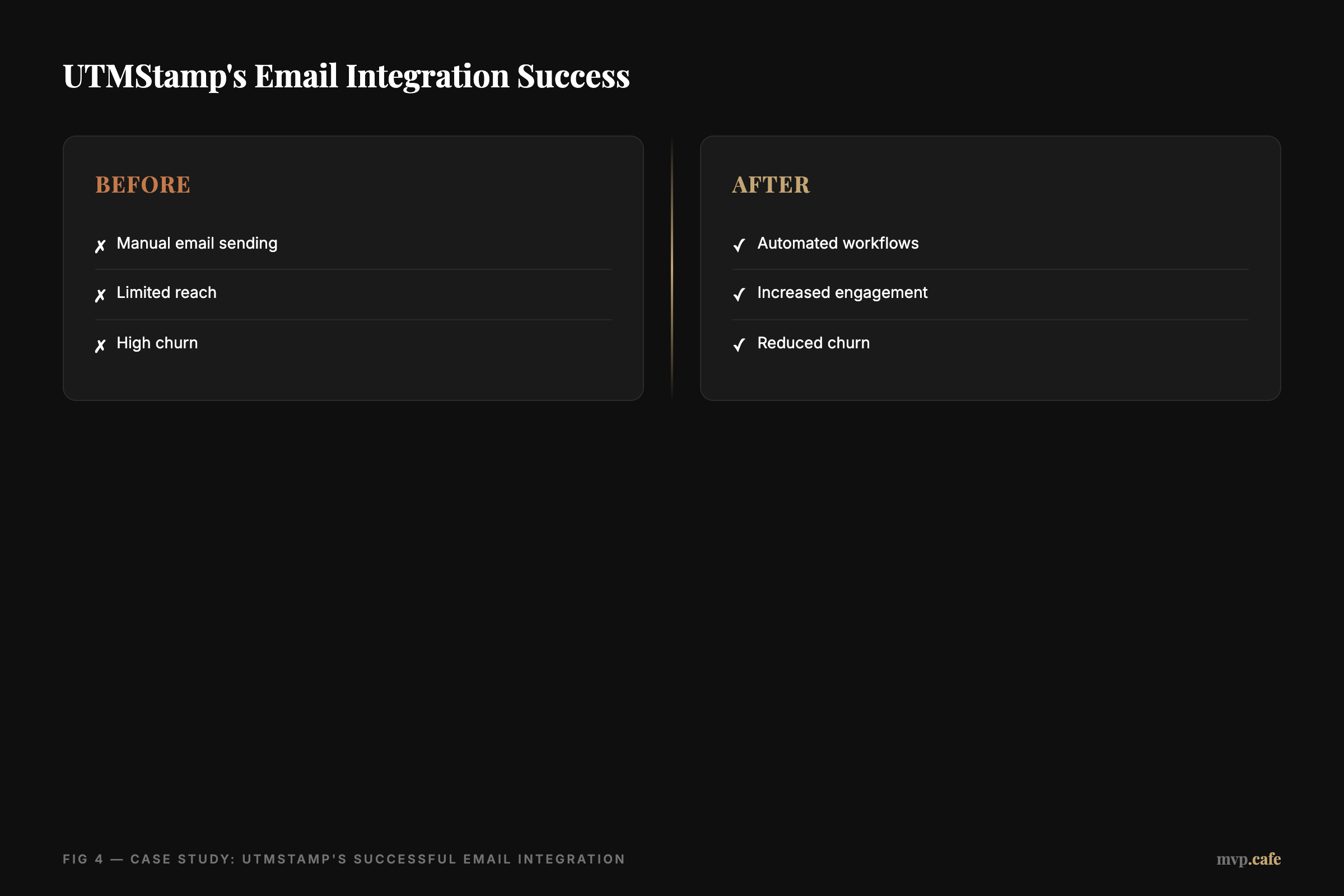
Real success story time. UTMStamp’s experience with email integration is a textbook example. UTMStamp, a project I led, needed seamless email capabilities to track user engagement through email signatures.
Challenges? Oh, they were plenty. We had limited resources and no tech team for a custom build. The solution? Opted for a third-party service, saving us weeks in development and setup. The outcome? We launched in just 13 days, securing 80 signups and 200 signatures at beta launch.
The takeaway? Third-party services didn’t just meet our immediate needs; they kept us nimble and focused on growth, not just wrestling with tech issues.
By now, you should have a clear roadmap to integrate email into your MVP without the tech headache. Ready to take your MVP to the next level? Check out our MVP build service and let us handle the heavy lifting.